Latest News
- View All
- February 2026
- August 2020
- July 2020
- June 2020
- April 2020
- March 2020
- February 2020
- January 2020
- December 2019
- November 2019
- October 2019
- September 2019
- August 2019
- July 2019
- June 2019
- March 2019
- February 2019
- December 2018
- November 2018
- October 2018
- September 2018
- August 2018
- July 2018
- June 2018
- May 2018
- April 2018
- March 2018
- February 2018
- November 2017
- October 2017
- September 2017
- August 2017
- July 2017
- June 2017
- May 2017
- April 2017
- March 2017
- February 2017
- January 2017
- December 2016
- November 2016
What is Public Health?
In the wake of the COVID pandemic and the politicization of Public Health, the Partnership for Public Health wants to rebuild trust and provide a reliable, trusted source of information for Lancaster County and beyond. Our goal is for the website to serve as a platform for discussing public health issues and controversies. Without trust, our communities face significant challenges in maintaining a sense of shared purpose. We aim to enhance the quality of life in Lancaster County by fostering understanding of each other’s perspectives and goals. Ultimately, our goal is to have a better life for our families, friends, and neighbors. It is essential to understand what Public Health is and to strive to achieve it. “Public health is the science of protecting and improving the health of people and their communities. This work is achieved by promoting healthy lifestyles, researching disease and injury prevention, and detecting, preventing, and responding to infectious diseases. Overall, public health is concerned with protecting the health of entire populations. These populations can be as small as a local neighborhood, or as big as an entire country or region of the world.”1 “When we think about the word ‘health,’ we typically associate it with medical matters, so the definition of public health can seem a little confusing. Unlike the practice of medicine in clinical settings—like a doctor’s office or hospital—public health is not a one-on-one discipline, nor do those in the field practice medicine.”2 “Most of us rarely think about public health until a crisis, such as a devastating hurricane or pandemic, captures our attention. But public health officials work on a daily basis to keep people healthy and safe, locally and around the world, by preventing disease and injury. In fact, public health initiatives such as vaccinations, food safety regulations, and clean air and water policies increased life expectancy in the U.S. by more than 30 years between 1900 and 2020.”2 Public health in action: 1. An environmental health specialist monitors water quality at a beach to ensure it’s safe for swimmers, surfers, and divers. 2. An emergency preparedness coordinator identifies a road that is susceptible to flooding. The coordinator develops a plan to block the road and reroute traffic when heavy rain is predicted. 3. A community health worker conducts home visits in a low-income neighborhood, identifies families with young children who lack access to healthcare, and connects them with local clinics and social services to ensure they receive essential medical care and support. 4. A nutritionist works with a school district to develop healthier school lunch options for kids. 5. An occupational health and safety officer assesses workplace hazards and conducts safety training for employees. What are the three Ps of public health? The three P’s of public health are prevention, protection, and promotion. These are the core functions of public health. How do you think public health can help you and your community? 1 Source: CDC Foundation Link: "What is Public Health?" 2 Source: Walden University Link: "What is Public Health and Why is it Important?" Credit: Image from Pixabay
Read More
Why the Triumph of Vaccines is in Jeopardy
February 7, 2026Vaccines are arguably one of the greatest accomplishments of the human race. The magnitude of disease, suffering, disability, and death prevented by vaccines is nearly incalculable. In the U.S. in the years leading up to 1900, 18% of children age five or less died of contagious diseases such as polio, measles, smallpox, whooping cough, and diphtheria. Nearly one child in five died. Each of these infectious diseases is today preventable by vaccination. At times, however, we forget the lessons of our own past. Let’s review that history using a few examples, both from the past and the present.
Polio, once endemic in the U.S, is a highly contagious respiratory and gastrointestinal tract infection. While most cases have mild or no symptoms, a small percentage of children become paralyzed due to the invasion of the brain and spinal cord. Fear of paralytic polio shut down swimming pools, school activities, and social events during the summer months in the 1950’s. Some towns excluded anyone under age 16 from entering for fear of igniting an outbreak. Hospitals opened entire units dedicated solely to the care of iron lung patients. The incidence of Polio peaked in 1952 in the U.S., leaving over 20,000 children paralyzed in that year alone. The development and release of the Salk and Sabin polio vaccines were heralded as one of the greatest accomplishments of modern medicine, and a government-sponsored nationwide vaccination program resulted in the eradication of wild-type polio cases nationally. Polio remains endemic, however, in many countries around the world. Poor public health infrastructure and poverty allow polio, along with many other infectious diseases, to be a major cause of infant and childhood mortality and long-term disability in underdeveloped countries or those where immunization rates have declined: a cautionary tale.
Measles is the most contagious infectious disease on this planet. Measles is more than just a transient fever, rash, and cough illness. Measles can cause pneumonia, blindness, brain swelling (encephalitis), and death. The risk of the sudden onset of fatal invasive brain infection can persist for 7-10 years after the initial infection. Measles during pregnancy can lead to miscarriage, stillbirth, and fatal infection in both the mother and newborn. The CDC estimates that in the decade before vaccine availability, 3-4 million children annually were infected with the measles virus, leading to 48,000 hospitalizations and 400-500 deaths, including 1,000 cases of encephalitis. Measles vaccination, in the form of the MMR vaccine, is safe and highly protective against infection, but due to the highly contagious nature of the virus, it is protective only if we maintain a community vaccination compliance rate of at least 95%. And therein lies the problem. Even in developed countries, vaccine compliance has waned. Measles is once again endemic across the globe, including the worst outbreak in 25 years in Europe. The United Kingdom has now lost its measles elimination status, and the U.S. is at risk for losing its status as well.
Last year, the United States began to experience a nationwide outbreak of measles. In 2025, the CDC tracked 49 outbreaks of measles in 45 jurisdictions involving 2,255 confirmed cases. South Carolina alone has seen 700 cases. So far in January 2026, the U.S. has already seen 588 additional cases as the outbreak seems to continue to accelerate. As of the date of this writing, the Pennsylvania Department of Health has confirmed 5 cases of measles in Lancaster County, where vaccine compliance has waned in general and has been historically low in certain populations. There is no effective treatment. Vaccination is our only effective weapon.
There are 11 vaccines recommended by the current CDC for universal administration to children, with another 6 vaccines targeted at high-risk groups. Each has undergone rigorous study and analysis before attaining licensure by the FDA. Unfortunately, vaccine compliance rates in the U.S. have fallen to the lowest levels in over 30 years. A vaccine hesitancy movement, fueled largely by misinformation and bias, has gained momentum over the last ten years. This trend was further exacerbated by the interruption of general medical care, including routine vaccine schedules, during the COVID-19 pandemic.
Vaccine development is a complex science. The basic science research required to develop a vaccine typically takes years. Prior to the release of a new vaccine to the public, thousands of doses are administered to volunteers and monitored closely for both safety and efficacy prior to submitting data to the CDC and FDA. A vaccine must demonstrate benefits that far outweigh risks to gain licensure. Vaccines are not perfect, and rare complications can unfortunately occur. Additional governmental tracking after the release of vaccines to the public is an ongoing process aimed at ensuring safety.
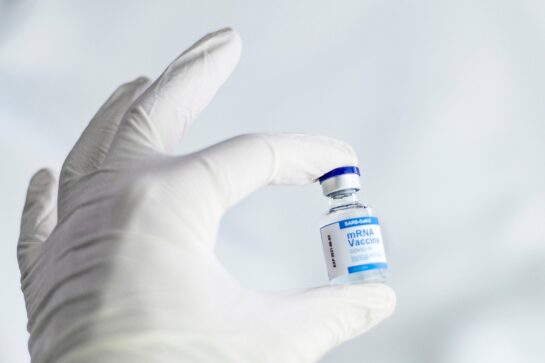
COVID-19 has caused an unprecedented global pandemic, resulting in over 145 million cases and 1.2 million deaths in the U.S. alone. The development and implementation of global immunization programs against COVID-19 saved an estimated 14-19 million lives. The mRNA vaccines against COVID-19 were tested in studies of over 73,000 people before release by emergency authorization to the public. Over 13 billion doses of the COVID-19 vaccine have been administered globally. What is clear is that vaccination against COVID-19 reduces the risk of severe disease, hospitalization, death, as well as the development of prolonged debilitating symptoms (long COVID). The COVID-19 vaccines are the most scrutinized in all of vaccine science. The mRNA vaccines against COVID-19 are safe. A massive 4-year safety study of 28 million adults showed that the mRNA COVID-19 vaccines did not lead to higher death rates in recipients. We must keep in mind that COVID-19 is still endemic in the U.S., with over 1,000 deaths in January 2026 and will be with us for the foreseeable future. Continued adherence to vaccine recommendations is crucial.
The practice of medicine involves carefully weighing risks and benefits, be it at the level of an individual patient or a population. Shared informed decision-making between the patient and doctor has always been practiced. The driver of governmental decision-making, however, must be that which is in the best interest of the nation, of ‘we the people’. We live in a society where individual freedoms must sometimes yield to the greater good of the public. When you vaccinate yourself, you also protect those around you, including the most vulnerable in our society. This herd immunity protects all of us.
So, what as a society can we do in the era of vaccine hesitancy, misinformation, and politically motivated agendas? We must trust the science that has brought us so very far. We must trust and value true expertise, not entrenched political camps. We must recognize that we have an obligation to protect not only ourselves and our family, but also others in our community. It is essential to remember that the benefits of sanctioned vaccination programs far outweigh the risks. We must resist the flood of misinformation so prevalent in our digitally connected society. Vaccines are one of the greatest accomplishments of the human race. We can only hope that we as a nation wake up and return to science-based policy before our past becomes our prologue.
Joseph M. Kontra, MD Retired Chief of Infectious Diseases and Hospital Epidemiologist Penn Medicine Lancaster General Health
Image by Spencer Davis from Pixabay
Read More